Replaced manual assessment paperwork with a platform the business runs on daily
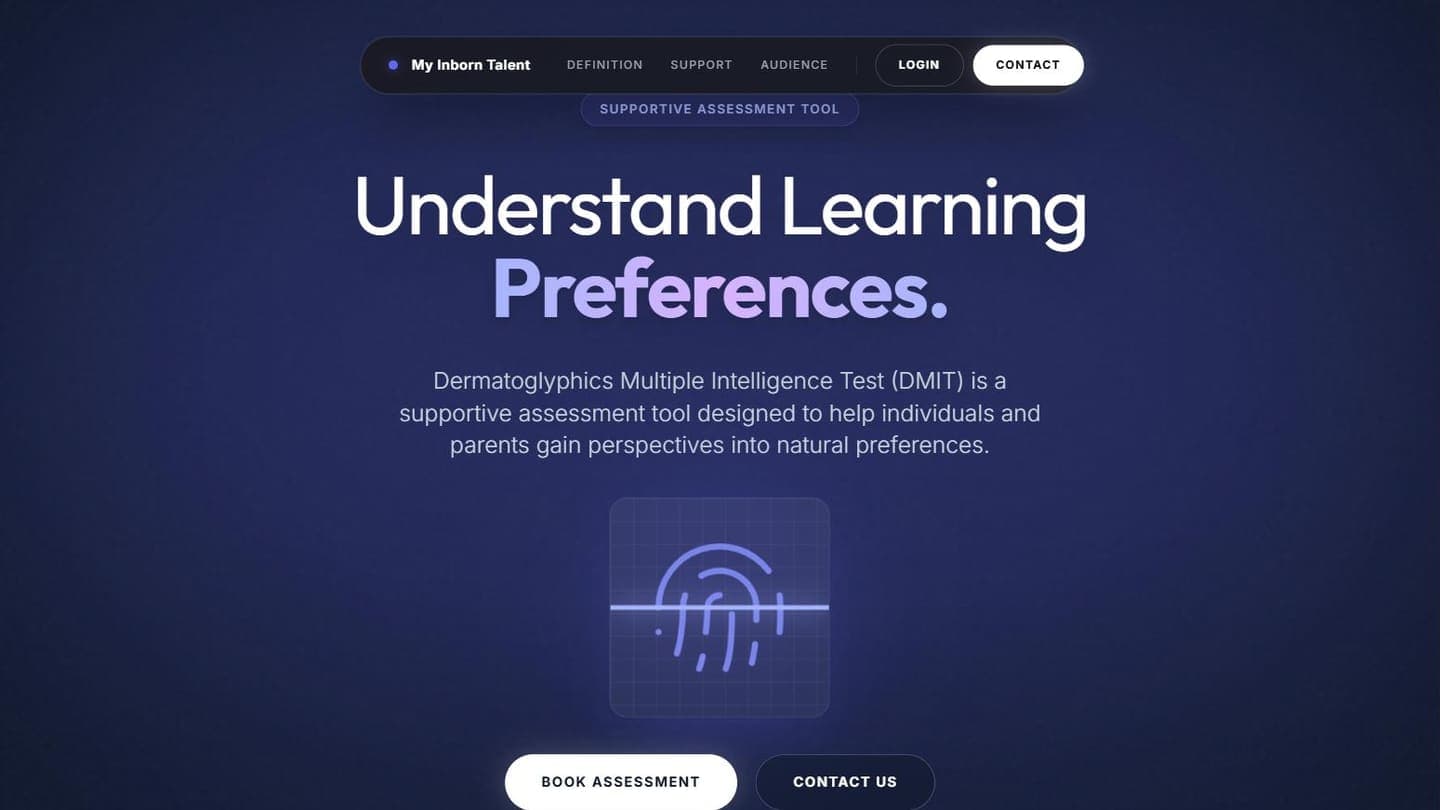
Before, and after
Reports written by hand
- Every assessment report was written out manually, hours at a time.
- Client records lived across separate files, so finding a past assessment meant searching for it rather than opening it.
- Throughput was capped by how many write-ups one person could get through, not by how many clients wanted an assessment.
- The admin came out of the same hours as the counselling, and counselling is the part clients pay for.
Generated from the assessment
- The report is produced from the assessment data — the counsellor reviews it instead of composing it.
- Assessments, reports, the counselling flow and client management sit in one place.
- Generation runs as a queued job rather than at request time, and the counsellor is notified when a report is ready.
- Past assessments are looked up rather than hunted for.
What they were up against
A DMIT assessment business running on manual report writing and client records scattered across files. Every assessment consumed hours of admin that should have gone into counselling.
What we shipped
An end-to-end platform — assessments, automated report generation, the counselling flow and client management in one place.
What went wrong, and what we did
Report generation was slower than promised in the first build because the templates were doing layout work at request time. Moving generation to a queued job fixed it, but it meant reworking how counsellors were notified — a change we should have anticipated during scoping and did not.
What was asked for, and what was done
The brief in their words.
- Somewhere to stop writing assessment reports by hand.
- Client records in one place instead of across separate files.
What actually shipped.
- An assessment flow that captures the data once.
- Reports generated from that data, for the counsellor to review rather than compose.
- The counselling workflow and client management in the same system.
- A 95/100 performance score with no cumulative layout shift — it does not jump while a counsellor is reading it.
Not in the brief. Proposed by us.
- Moving report generation to a queued job rather than building it at request time — which is what fixed the speed, and meant reworking notifications too.
Pointed at customers and revenue.
- Admin hours move back into counselling, which is the part clients pay for.
- Throughput stops being capped by how many write-ups one person can get through in an evening.
How myinborntalent.com scores
Measured on 16 Oct 2026 with Lighthouse 12.8.2, the engine behind Google's PageSpeed Insights: three runs on mobile and three on desktop. This is a lab test rather than data from real visitors, so treat it as a dated snapshot, and run it yourself if you want a second opinion.
Mobile
- Performance
- 67
- Accessibility
- 96
- Best practices
- 96
- SEO
- 83
Performance ranged 65–67 across 3 runs; the median run is shown.
Desktop
- Performance
- 95
- Accessibility
- 96
- Best practices
- 96
- SEO
- 83
Performance ranged 94–95 across 3 runs; the median run is shown.
| Measure | Mobile | Desktop |
|---|---|---|
| First Contentful Paint | 4.7 s | 1.0 s |
| Largest Contentful Paint | 6.0 s | 1.2 s |
| Total Blocking Time | 50 ms | 0 ms |
| Cumulative Layout Shift | 0.001 | 0.002 |
| Speed Index | 4.7 s | 1.1 s |
Checks that still fail (mobile)
- Accessibility: 1 of 21 fail — Background and foreground colors do not have a sufficient contrast ratio.
- Best practices: 1 of 14 fail — Browser errors were logged to the console
- SEO: 2 of 9 fail — Document does not have a meta description
Largest savings still open (mobile)
- Enable text compression · Est savings of 471 KiB
- Reduce unused JavaScript · Est savings of 340 KiB
- Eliminate render-blocking resources · Est savings of 1,200 ms
Talk to the founder, today.
WhatsApp, or leave a number and get a call back — usually the same day. No forms about budget, no sales team.